
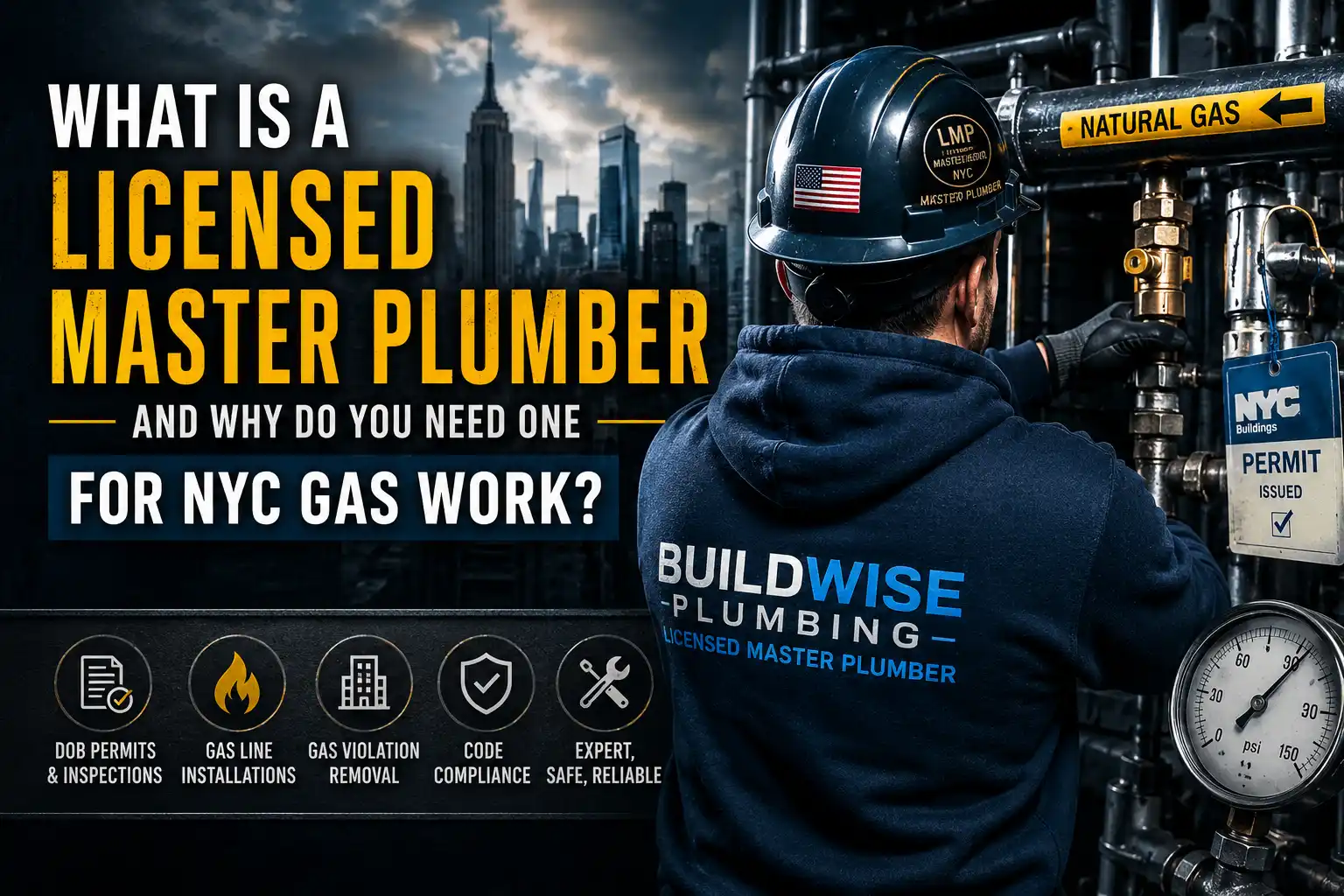
If you have ever searched for a plumber in New York City, you may have noticed that some companies advertise themselves as a Licensed Master Plumber, or LMP, while others simply call themselves plumbers.
That raises an obvious question: What is the difference, and does it really matter?
For a simple clogged drain or faucet replacement, the distinction may not seem important. When the job involves gas piping, a gas leak, a utility shutoff, permits, inspections, or a Department of Buildings violation, however, it matters a great deal.
As a Licensed Master Plumber in NYC, I have seen what happens when property owners unknowingly hire someone unqualified to handle regulated gas work. Sometimes the result is a failed inspection. Sometimes it means removing the work and paying to have it completed again. In the worst cases, an improper repair can create a serious safety hazard.
Nobody enjoys paying for the same plumbing job twice, especially when the first version came with a violation.
What Is a Licensed Master Plumber?
A Licensed Master Plumber is a plumbing professional who has met New York City’s licensing requirements and is authorized to perform or supervise regulated plumbing work throughout the five boroughs.
Becoming an NYC Licensed Master Plumber takes considerably more than purchasing a set of tools and printing “plumbing expert” on the side of a van.
Applicants must meet strict experience requirements, pass written and practical examinations, complete a background investigation, and demonstrate a thorough understanding of New York City plumbing codes, fuel gas requirements, safety procedures, and permit regulations.
The license also carries real responsibility. An LMP is accountable for work performed under the license, including permit applications, inspections, code compliance, and the employees working under the plumber’s supervision.
Property owners can use the official NYC Department of Buildings license search to check whether a plumber’s license is current before hiring them.
Why Can’t Every Plumber Perform NYC Gas Work?
There are many skilled plumbing mechanics and technicians working throughout New York City. However, being experienced at general plumbing repairs does not automatically authorize someone to obtain permits or take responsibility for regulated gas piping work.
Gas systems are controlled by strict codes for a good reason. Natural gas is dependable and efficient when the system is installed and maintained correctly. When it is not, the consequences can be far more serious than a dripping faucet or slow drain.
Depending on the project, NYC gas work may involve:
- DOB permits and filings
- Approved construction plans
- Gas-pipe sizing calculations
- Pressure testing
- Required inspections
- Utility-company requirements
- Documentation and final sign-offs
Plumbing permits are generally issued to a Licensed Master Plumber, and work performed under that permit must be completed by the licensee or properly supervised employees.
Hiring someone without the correct qualifications can lead to failed inspections, gas service delays, violations, insurance complications, and expensive corrective work.
The gas line behind the wall is not a good place for creative improvisation.
What Types of Gas Work May Require a Licensed Master Plumber?
The exact requirements depend on the project's scope, the property, and whether existing gas piping is being installed, altered, repaired, or replaced. Common projects handled by an LMP include the following.
New Gas-Line Installations
Installing gas piping for a new building, apartment renovation, commercial kitchen, boiler room, or additional appliance requires proper planning and sizing.
The system must provide sufficient gas to the equipment without creating unsafe pressure conditions. The installation must also comply with applicable NYC construction and fuel gas codes.
Gas-Pipe Repairs and Replacements
Older gas piping may become corroded, damaged, improperly supported, or unsuitable for the building’s current needs.
A Licensed Master Plumber can evaluate the system, identify the source of the problem, determine whether a repair or replacement is appropriate, and complete the work according to code.
Gas Leaks and Utility Shutoffs
When a gas leak is discovered, the utility company may shut off service until the unsafe condition has been corrected.
If you smell gas, leave the immediate area and contact the appropriate emergency or utility service. Do not attempt to locate or repair the leak yourself.
Once the situation is made safe, our NYC gas-line repair and gas-violation services can help identify the required repairs, complete pressure testing when necessary, coordinate inspections, and assist with the gas-restoration process.
Gas Meter Relocations and Service Upgrades
Moving a gas meter or increasing the property’s gas demand can involve more than extending an existing pipe.
The project may require new piping, load calculations, permits, inspections, and coordination with the gas utility. Adding boilers, water heaters, cooking equipment, or other gas appliances may also require the service and piping system to be reevaluated.
Boilers, Water Heaters, and Heating Equipment
Gas-fired boilers and water heaters depend on properly sized gas connections, safe venting, appropriate controls, and code-compliant installation.
Buildwise also provides specialized services for commercial boilers, water heaters, and high-pressure steam heat exchangers throughout NYC.
With heating equipment, the gas connection is only one part of the system. Water circulation, pumps, controls, pressure, and drainage must all work together. Older or larger buildings may also benefit from professional pump installation and replacement services when pressure, circulation, or wastewater equipment needs attention.
Commercial Gas Piping
Restaurants, apartment buildings, healthcare facilities, schools, hotels, retail spaces, and mixed-use properties often have more complicated gas demands than a single-family home.
These properties may include multiple meters, boilers, commercial cooking equipment, mechanical rooms, and long gas-piping runs. Our commercial plumbing services in NYC cover gas piping and other plumbing systems for businesses, property managers, contractors, and building owners.
Permits, Inspections, and NYC Code Compliance
One of the biggest advantages of working with an experienced Licensed Master Plumber is that we understand the paperwork as well as the piping.
Depending on the project, we may handle or coordinate:
- Permit applications
- DOB filings
- Required pressure tests
- Plumbing and gas inspections
- Corrections identified during inspections
- Utility documentation
- Final approvals and project closeout
Paperwork may not be the most exciting part of plumbing, but properly completed paperwork can prevent delays, violations, and unpleasant surprises when you sell, refinance, renovate, or insure the property.
The goal is not simply to make the gas flow again. The goal is to make sure the system is safe, documented, and compliant.
How an LMP Helps Resolve Gas Violations and Warning Tags
Gas violations and warning tags can be issued for several reasons. The piping may be leaking, damaged, improperly installed, or unable to pass a required test. Work may have been completed without the proper permits, or an older installation may no longer satisfy the requirements for the proposed use.
Sometimes the current owner did not cause the problem at all. It may have been inherited when the building was purchased.
A Licensed Master Plumber can inspect the condition, explain what must be corrected, complete the necessary repairs, arrange testing, and assist with the documentation needed to move the property toward compliance.
The type of warning tag can affect what happens next. Our guide to Class A, Class B, and Class C gas warning tags explains the differences and what NYC property owners should know after receiving one.
We also provide Local Law 152 inspection and compliance services for covered New York City buildings that require periodic gas-piping system inspections.
Why the Cheapest Gas Contractor May Cost More
Everyone wants to control costs, and there is nothing wrong with comparing estimates. The trouble begins when price is the only factor being compared.
A low estimate can become very expensive if the work:
- Cannot pass inspection
- Was completed without required permits
- Must be removed and rebuilt
- Delays gas-service restoration
- Creates a DOB violation
- Causes problems with insurance or a property transaction
We have been called to correct work that property owners believed was already finished. By that stage, the owner may have paid for the original work, corrective work, additional testing, and several extra days or weeks without gas service.
Choosing a gas contractor based only on the lowest price is a little like buying a discount parachute. It may save money, but that is not the part of the experience you will be thinking about later.
What Should You Ask Before Hiring a Gas Plumber?
Before hiring someone for regulated gas work, ask a few direct questions:
- Are you an NYC Licensed Master Plumber?
- What is your license number?
- Will this project require a permit?
- Who will obtain the permit and schedule inspections?
- Have you completed similar gas projects?
- Are you properly insured?
- Will I receive a written scope of work?
- Will you help coordinate the steps required to restore service?
A reputable Licensed Master Plumber should be willing to explain the process clearly. You should understand what is being repaired, which approvals may be required, and what needs to happen before the gas can be turned back on.
Why Property Owners Choose Buildwise Plumbing
At Buildwise Plumbing, we work with homeowners, landlords, property managers, contractors, and business owners throughout New York City and Westchester County.
We handle gas-line installations, leak repairs, pressure testing, gas-service restoration work, violation corrections, Local Law 152 inspections, commercial plumbing, boiler systems, renovations, and general plumbing repairs.
Our approach is straightforward: inspect the problem carefully, explain the options clearly, and complete the work safely and professionally.
No shortcuts, no confusing technical performance designed to make a simple answer sound complicated, and no disappearing act halfway through the project.
Frequently Asked Questions
What is the difference between a plumber and a Licensed Master Plumber?
A plumber may be an experienced mechanic working under the supervision of a Licensed Master Plumber. The LMP holds the NYC license, can obtain applicable plumbing permits, supervises regulated work, and carries legal responsibility for work completed under the license.
Is a Licensed Master Plumber required for every gas repair?
Requirements depend on the work being performed. Alterations, installations, replacements, and many permit-related gas projects must be completed under a Licensed Master Plumber. An LMP can evaluate the condition and determine the proper process.
Can a handyman repair a gas pipe?
Gas piping should not be repaired by a handyman or an unqualified contractor. Improper repairs can create a serious safety hazard and may result in violations, failed inspections, or continued utility shutoff.
Who obtains permits for NYC gas work?
When a plumbing permit is required, the Licensed Master Plumber normally handles the permit application and coordinates the related inspections and filings.
How can I verify a plumber’s license?
Ask for the plumber’s full name and NYC license number, then confirm the license through the NYC Department of Buildings license search.
What happens if gas work was completed without a permit?
The property may face violations, inspection problems, delays in restoring gas service, or a requirement to expose, remove, or redo the work. The exact consequences depend on the work and the condition of the installation.
Can Buildwise help remove a gas violation?
Yes. We can inspect the property, identify the required corrections, perform code-compliant repairs, coordinate applicable testing and inspections, and assist with the documentation needed to resolve the condition.
How long does it take to restore gas service?
The timeline depends on the extent of the repairs, permit requirements, inspection availability, and utility scheduling. We move the process forward as efficiently as possible, but no plumber can responsibly guarantee another agency’s or utility company’s exact schedule.
Hire the Right Professional for NYC Gas Work
Gas work is not an area where “close enough” is good enough.
Whether you need a gas leak repaired, a new line installed, a warning tag addressed, a violation corrected, or service restored after a shutoff, hiring an experienced Licensed Master Plumber helps protect your property and everyone inside it.
At Buildwise Plumbing, we combine hands-on experience with a thorough understanding of NYC gas requirements, permits, inspections, and building systems. Our goal is simple: do the work safely, do it professionally, and do it right the first time.