
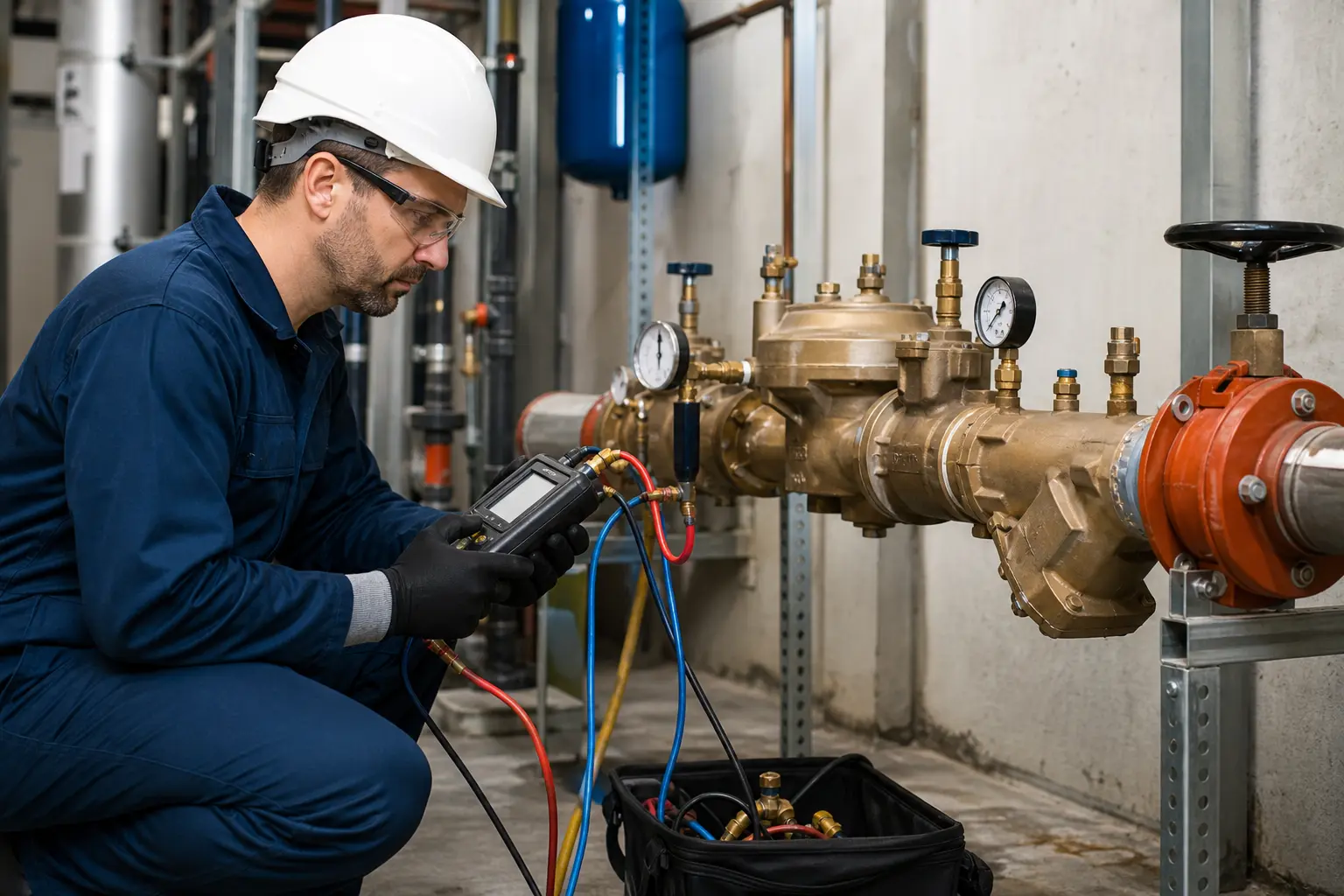
If your commercial building has kitchens, boilers, irrigation, medical build-outs, or other cross-connections, backflow testing in NYC isn't paperwork you can keep punting. You need a NYS-certified tester, current records, and the right filings every 12 months, especially after tenant changes or renovations that quietly raise contamination risk.
Backflow testing rarely shows up at a good time. Usually it surfaces after a failed inspection, a city notice, or a tenant asking why a shutdown wasn’t planned better. In a New York City commercial building, putting it off creates two problems at once: a compliance issue and a water safety issue.
Buildings with irrigation lines, boilers, commercial kitchens, cooling equipment, or other cross-connection risks can’t treat this like routine paperwork. The requirement is routine. Missing it isn’t. Owners and property managers need current records, a certified tester, and a contractor who understands how backflow testing in commercial NYC buildings fits into broader commercial plumbing services in NYC.
Why backflow issues become urgent in commercial buildings
Backflow problems get serious fast because this isn’t just a plumbing detail. It affects water quality, day-to-day building operations, and liability. The device is there to keep used or contaminated water from reversing direction and entering the potable supply. That risk shows up during an actual cross-connection event, not just the normal pressure changes that happen all day as fixtures turn on and off.
In NYC, required backflow prevention devices generally must be tested every 12 months by a New York State-certified backflow prevention assembly tester. The completed test report must then be properly signed and submitted to the correct city agency.
Commercial properties usually have more ways for that risk to develop. A restaurant has prep sinks, dishwashers, and ice machines. A mixed-use building may have retail on the ground floor, boiler feed lines, hose bibbs in service areas, maybe irrigation outside. Medical, salon, and light industrial tenant build-outs raise the stakes even more. And tenant use changes. A vacant suite becomes a café or treatment space, and suddenly the original protection setup no longer matches what’s happening in the building.
- Contamination risk that can affect tenants, staff, customers, or multiple units
- Missed compliance deadlines when testing was skipped or records were never filed properly
- Service interruptions if a device fails, leaks, or has to be isolated for repair
- Emergency costs tied to shutdowns, access problems, and after-hours work
The part that catches managers off guard is how quiet a failure can be. No flooded floor. No ceiling stain. No obvious complaint. Then a city notice arrives, and somebody discovers the device hasn’t been tested in years even though the building has several tenant spaces with different water uses. That comes up often on backflow prevention calls. For many properties, this falls under the larger scope of backflow prevention service and RPZ work in NYC, not some isolated plumbing oddity.
Who Is Allowed to Perform Backflow Testing in NYC?
- The test must be performed by a NYS-certified tester.
- The tester may also be a Licensed Master Plumber, but those are separate qualifications.
- The annual DEP form requires the appropriate signatures.
- Installation, replacement, and certain repairs may require an NYC Licensed Master Plumber.
Which NYC properties should pay close attention
Some buildings need to move this up the list now, not at the next budget meeting. Backflow risk goes up with occupancy, tenant use, and the number of water-fed systems added over time. A small office with standard restrooms usually has fewer trouble spots than a mixed-use property with restaurant space, boiler feed, irrigation, and an old meter room full of assemblies nobody has touched in years.
In NYC, this comes up most often in office buildings, retail spaces, restaurants, medical and dental offices, schools, warehouses, manufacturing spaces, and larger multifamily properties with commercial components or shared mechanical systems. More equipment and more branch lines usually mean more chances for a cross-connection issue.
Some of the biggest triggers don’t look urgent at first.
- Tenant turnover that changes the use of the space, especially food service, healthcare, salon, or light industrial
- Renovations that add sinks, hose connections, boilers, coffee equipment, irrigation, or process water lines
- Older backflow assemblies with no clear tag history, missing paperwork, or a device that doesn’t match current field conditions
- A newly acquired building with incomplete prior test reports or no usable records at all
If ownership or management just took over a property, existing devices should be verified early. It’s not glamorous work, but it matters. Find out what assemblies are installed, what they protect, when they were last tested, and whether the records match the building as it exists today. Plenty of managers inherit a setup that made sense ten years ago and has been patched around ever since.
What commercial backflow testing actually involves
A proper test visit is usually straightforward, and it should feel that way on site. For most commercial backflow testing in NYC, the first issue is access. The tester needs the device location, enough room to work, and a way to shut water off if the assembly or valves don’t cooperate. That sounds minor until someone stores supplies in front of the meter room, a tenant keeps the mechanical space locked, or an old shutoff won’t fully close.
After access is handled, the tester identifies the assembly, checks its condition, and connects calibrated test gauges to verify performance. That confirms the device is functioning at that time. It does not mean the entire building has been reviewed for every possible cross-connection issue, and it doesn’t automatically mean replacement is needed unless the device fails, leaks, or is too deteriorated to service.
A legitimate visit usually includes:
- confirming the device type, size, and location
- isolating the assembly as needed and running the required test sequence
- noting visible problems such as corrosion, frozen valves, missing tags, or bypass issues
- documenting pass or fail results and what was found on site
After the test, there should be records, not just a quick verbal “it passed.” At minimum, that means the test result, device identification, date of service, and whatever filing or reporting applies to the property’s compliance record.
If the assembly fails, the job usually isn’t done that day. The next step may be a repair, an internal rebuild, or full replacement, depending on the condition of the body, check valves, relief valve, and shutoffs. Then it gets retested. A failed device isn’t closed out because someone diagnosed it. It’s closed out when it passes the retest and the paperwork is in order.
A simple decision path for owners and managers
Most owners and managers don’t need more theory here. They need a clean next step based on what’s actually sitting in the building file, or not sitting there.
- Start with the trigger. A DEP notice, an overdue date on last year’s report, renovation work near the water service, or low confidence in the device condition should move this up the list.
- Confirm that the building has a backflow assembly, and find it. Don’t assume. Check the meter room, basement service entrance, mechanical space, and old turnover files. In mixed-use buildings, look carefully if there’s food service, boiler feed, irrigation, or specialty tenant equipment. If nobody can clearly identify the device location, schedule a site visit before talking about annual testing.
- Check the paperwork. Look for the last test report, device make and size, install records, and any prior failure or repair notes. Missing records are common, especially after management changes. In that case, the first call may need to cover verification, not just routine backflow testing for commercial NYC properties.
- Schedule testing if the device is present and due. Clear access first. A lot of delays come from locked rooms, blocked assemblies, or poor shutdown coordination.
- Move to repair or replacement planning if the device fails, leaks, has frozen shut valves, or can’t be tested properly. At that point, this is no longer just a paperwork item. It’s a field condition that needs to be dealt with.
- Keep the records where the next manager can find them. Store the PDF, building file, and service history together. Losing a report six months later creates the same problem all over again.
A new manager taking over a mixed-use property with no recent paperwork and no device map shouldn’t guess. Verification comes first. Delay is what turns a routine compliance task into an urgent plumbing call, and sometimes a more expensive one.
How to choose a qualified NYC plumbing partner
The main hiring question is simple. Can the contractor handle the test, manage the compliance paperwork correctly, and keep the building from getting stuck if the device fails?
With backflow testing for commercial NYC properties, the lowest quote often leaves out the part that causes the real headache later. Maybe the test is included, but not filing support. Maybe retesting costs extra. Maybe nobody mentions what happens if an isolation valve is frozen, the assembly is leaking, or DEP records don’t match what’s in the meter room. Cheap proposals tend to look better before the first problem shows up.
Before hiring, ask a few direct questions:
- Who handles the compliance documentation, and what exactly gets submitted after the test?
- If the device fails, can the same company diagnose, repair, replace, and retest it without handing the work off?
- How often do they work in occupied NYC commercial buildings with access limits, shutdown coordination, and older plumbing layouts?
A solid contractor should do more than arrive with a test gauge. They should be comfortable reviewing old records, spotting cross-connection concerns around boilers, irrigation, or tenant build-outs, coordinating with building staff, and responding quickly if a failed assembly creates an operational problem. License status, testing credentials, clear scopes, and plain-English reporting matter more than polished sales language.
If a building has overdue testing, missing records, or a recent failed result, it makes sense to get it reviewed before it turns into a city problem or a shutdown problem. For owners and managers who need broader support beyond this one issue, Buildwise Plumbing Heating & Contracting also provides commercial plumbing services in NYC for inspections, repairs, and ongoing building work.
Frequently asked questions
What is commercial backflow testing?
It’s the inspection and performance test of a backflow prevention assembly that protects your potable water from contamination. In a commercial building, that usually ties to kitchens, boilers, irrigation, medical space, hose connections, or other cross-connections. In NYC, the test has to be done by a New York State certified backflow prevention assembly tester, and the completed paperwork has to be signed and filed correctly.
How often should a commercial backflow be tested?
Usually every 12 months in NYC. That annual cycle is the baseline, but don’t wait for the calendar if the building changed in a meaningful way. A new restaurant tenant, a medical fit-out, added irrigation, or boiler work can all change the risk profile. Ownership changes are another big one. You want to verify what’s installed, what it protects, and whether the records still match the building.
How much does backflow testing typically cost in New York City?
The price varies by device type, access, building setup, and whether the visit stays routine. A straightforward annual test on an accessible assembly is one thing. A locked mechanical room, bad shutoff, leaking valves, or missing tags can turn it into a longer call fast. Ask for pricing that separates the test itself from repairs, filing, and any after-hours shutdown work, because those are often where costs drift.
How much does a commercial backflow valve cost?
There isn’t one useful flat number. Cost depends on the assembly type, size, location, and what the building actually needs now, not what was installed years ago. Replacement also isn’t just the device. You may be paying for permits, an NYC Licensed Master Plumber, shutdown coordination, and repairs to old valves or piping around the assembly. On older commercial properties, that surrounding work can matter as much as the valve.
Who is allowed to perform backflow testing in NYC?
The test must be performed by a New York State certified backflow prevention assembly tester. That certification is the key requirement for the annual test and report. Some people assume any plumber can handle it, but that’s not the same thing. Installation, replacement, and certain repairs may require an NYC Licensed Master Plumber, and the annual DEP form still needs the proper signatures before it’s submitted.